
The Man Who Refused to Plead Guilty —and Won
*Originally published in Issue 03: In Protest of The Cosy Desi Club magazine
Uzair Paracha spent nearly two decades imprisoned on a terrorism conviction in connection with 9/11 that was later overturned. Freedom, he writes in his memoir ‘The Man Who Refused to Plead Guilty,’ was only the beginning.
Uzair Paracha grew up between two worlds that both seemed to promise stability. In New York City, his childhood was ordinary in the most upper-middle-class American sense: Montessori school, summers at Disneyland, ice cream in the park after class. In Karachi, it was defined by privilege and possibility: elite schools, an affluent neighborhood, and a father whose business empire spanned between Pakistan and the United States.
By the time he was a teenager, he was already living across borders: studying in Pakistan, interning in New York, and moving through spaces shaped by wealth and connection.
Then came September 11, 2001.
In the aftermath of the attacks, Muslim immigrants, Pakistani men in particular, found themselves under intense scrutiny in the United States. At the same time, Pakistan's real estate market was booming, as many affluent overseas Pakistanis considered returning home. Seeing an opportunity, the Parachas opened an office in New York to market Pakistani real estate to expat communities. In 2003, at twenty-three years old, Uzair returned to New York to set up the business. He planned to get the business on the ground, then hopefully save enough to buy a ring for the girl he planned to marry.
Before leaving Pakistan, one of his father's associates approached him with a favor. A man named Majid Khan had recently relocated to Pakistan from the United States to join his pregnant wife. According to Khan, he had left without the immigration document he needed and requested that Uzair retrieve it using Khan’s identification card. Uzair agreed to try.
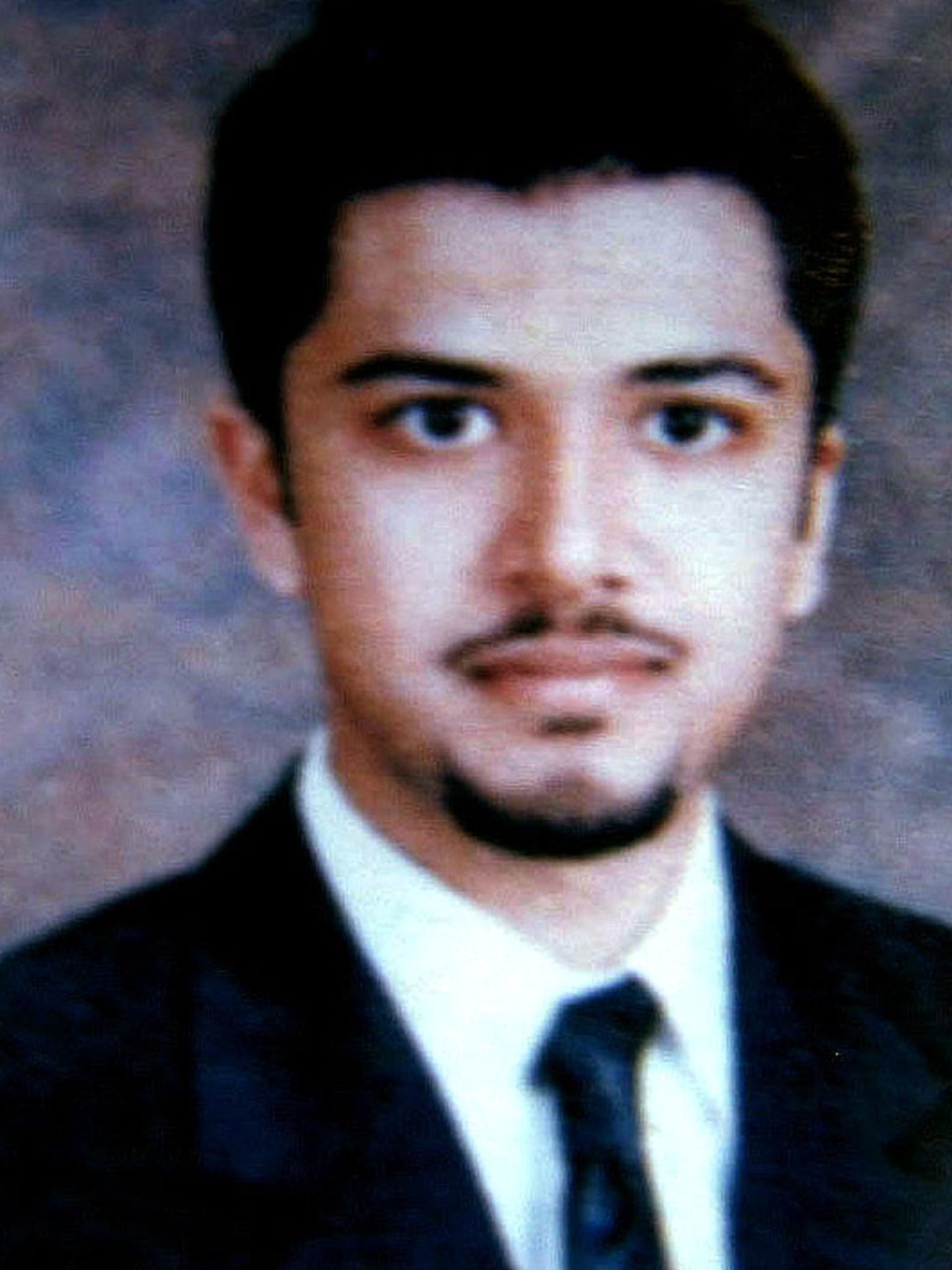
After arriving in New York, he called the Immigration and Naturalization Service, impersonating Khan. When officials informed him that he would need to appear in person, he abandoned the effort and turned his attention back to work.
One Friday evening, while sitting in his office in Lower Manhattan, FBI agents and an NYPD detective arrived and began questioning him about Majid Khan. Hours later, he found himself in an interrogation room, where harsh questioning continued until dawn.
He spent that night in a hotel room with FBI agents watching over him.
During the interrogation, Uzair learned something that stunned him: Majid Khan was an al-Qaeda operative who was involved in the execution of the terrorist attacks on September 11, 2001.
Federal prosecutors charged Uzair with providing material support to a foreign terrorist organization. Despite pressure from prosecutors and advice from many around him, Uzair refused to plead guilty.
He maintained his innocence.
“When I was first arrested at twenty-three, there was horror,” he said. “Over time, that horror became sadness. Then it became a sadness I lived with every day. I carried it until my release, and I still carry it now.”
In July of 2003, his father was kidnapped by US government forces on a business trip in Thailand and transferred to Guantanamo Bay Prison in Cuba. In November of 2005, after spending nearly two years in detention awaiting trial, he was convicted and sentenced to thirty years in prison by a jury.
Fourteen years later, in July of 2018, that conviction was overturned. The same judge who had once upheld the verdict concluded that the evidence was insufficient to sustain it. "It is a manifest injustice to uphold this conviction."
It always was.
After seventeen years in prison, Uzair was finally released and repatriated to Pakistan. Earlier this year, he published his memoir, The Man Who Refused to Plead Guilty: How a Muslim Convicted of Terrorism Won His Freedom.
For the first time, the story is being told in his own words.
Writing the Story
When Uzair returned to Pakistan, his first instinct was to move on. He wanted to forget the years that had been taken from him and build a life that resembled normalcy. However, forgetting proved impossible: Finding work was difficult. Old relationships had changed. Rumors and assumptions followed him wherever he went.
"It didn't work," he sighed. “People still talked. I had to tell my story in my own words." He jokes that after his release, he "traded one trauma for another."
What surprised Uzair the most is not the memory of prison itself, but the gradual realization of everything he lost while he was gone: His grandmother died. His parents divorced. His three younger siblings grew up without him.
"When I was first arrested at twenty-three, there was horror," he said. "Over time, that horror became sadness. Then it became a sadness I lived with every day. I carried it until my release, and I still carry it now."
Re-entry
Since his release seven years ago, Uzair has been learning how to live in a world that moved on without him. He married. He has learned how to use a smartphone. He is finally regaining weight and rebuilding his health after years of hunger strikes and forced feeding tubes, anxiety, and confinement. He is relearning Urdu, a language he rarely had the opportunity to speak in prison outside of brief phone calls with his mother.
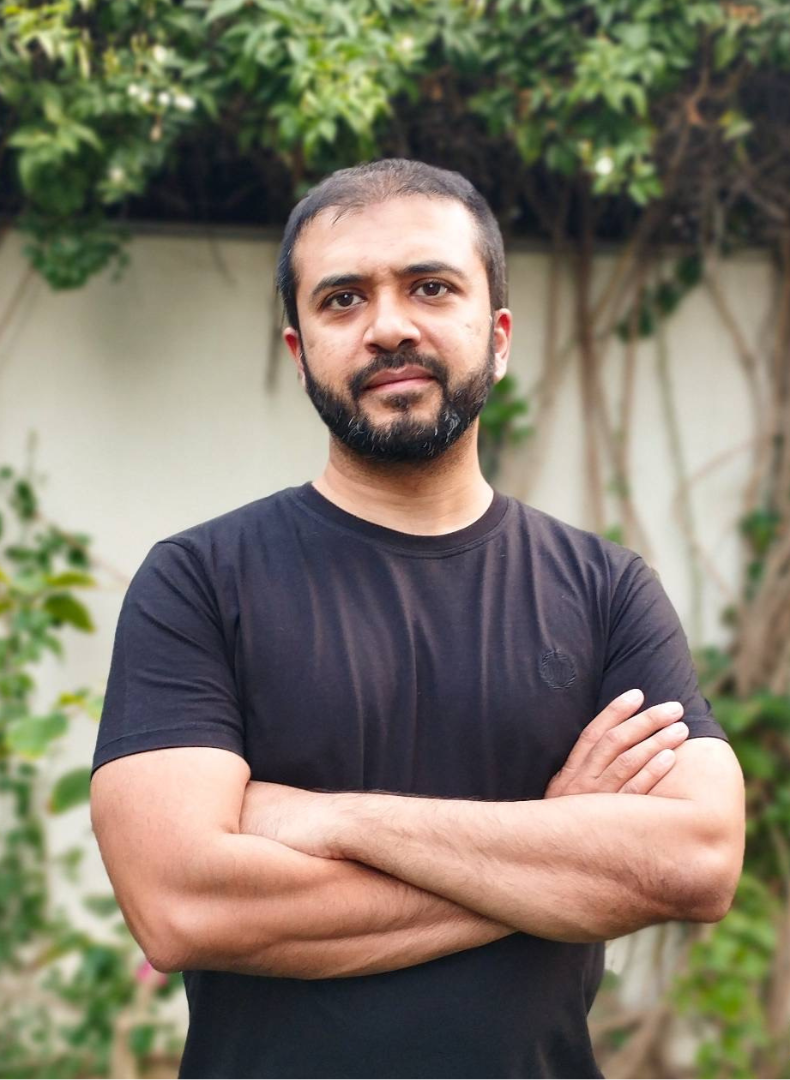
Today, he can walk barefoot on grass. He can step outside whenever he wants. He can decide where to go. However, freedom has not solved everything. "Too many miracles are needed for me to get my life back on track," he told me. "None of them have happened yet."
The greatest challenge he faces today is finding work; he dreams of being a professor. To universities, he is viewed as a liability. Many of the influential businessmen and politicians who once laughed at the Paracha dinner table with cups of tea now keep their distance.
He believes people are afraid to hire him.
One story has stayed with him. After reading about his case, an old friend — now a professor and hiring manager — reached out. The friend said he had been moved to tears after learning of Paracha’s release and offered his support. When Uzair explained that he was looking for work, the friend directed him to an online application portal. That was the extent of the help.
Despite losing seventeen years of his life, despite living through prolonged isolation, depression, and Post-Traumatic Stress Disorder, the United States has never apologized to him. He has received no compensation, no formal acknowledgement of wrongdoing, and no official declaration of innocence.
On the day of his release, a prison guard simply pointed toward the exit and said, "Get out. Quietly."
That was it.
Prison Reform And Progress
When Uzair was released, he was coached to forget the past and move forward. But he quickly realized that he was not the one trapped in the past. Everyone else was.
Not long after his release, Uzair was travelling with his cousin when they were pulled over because of a broken headlight. What should have been a routine traffic stop turned into hours of questioning. Uzair was handcuffed, detained, and interrogated about his background. On another occasion, he and his cousin drove to Canada to observe an art exhibit. After being questioned for hours at the border, Uzair was denied entry and deported the same night.
Even though Uzair spent seventeen years in prison, was declared innocent, and fashioned himself into a productive member of society, suspicion followed him wherever he went. For Uzair, these experiences are reminders that the fear and paranoia that defined the years after September 11 never truly disappeared; they just evolved.
He believes that while public awareness has improved, many of the institutions responsible for abuses committed during the War on Terror were never meaningfully held accountable.
For example, the Central Intelligence Agency (CIA) was subject to, effectively, a slap on the wrist when the US government uncovered the illegal and inhumane methods the CIA employed at its international black sites, including Guantanamo Bay.
A total of 9 detainees have died in custody at the Guantanamo Bay detention camp since it opened in 2002. None of them were ever convicted of a crime. Over 90% of Guantanamo detainees have been released without charge. One of the youngest detainees in Guantanamo was 14-year-old Mohammed El Gharani. Despite his age, Mohammed was tortured by having his head slammed against the floor and cigarettes stubbed on his arms. Mohammed was held for a total of seven years without charge or trial until his release in 2009.
“At what point does simply participating in an unjust system become a form of responsibility for its abuses?”
Even when released, former detainees continue to struggle to rebuild their lives without therapy, financial support, and equipped with mental and physical health issues due to their exposure to the CIA’s ‘enhanced interrogation techniques” such as slaps and "wallings" (slamming detainees against a wall) which were used in combination with sleep deprivation and nudity, waterboarding that led to convulsions and vomiting (In the United States Senate Torture Report released in 2014* the CIA wrote that a detainee became "completely unresponsive, with bubbles rising through his open, full mouth” after being subject to waterboarding), sleep deprivation that involved keeping detainees awake for up to 180 hours, usually standing or in stress positions, at times with their hands shackled above their heads, forced rectal feeding absent documented medical necessity, amongst many others.
Per the Senate Report, a detainee was told that he would never go to court, because "we can never let the world know what I have done to you." CIA officers also threatened at least three detainees with harm to their families— to include threats to harm the children of a detainee, threats to sexually abuse the mother of a detainee, and a threat to "cut [a detainee's] mother's throat."
The horrific examples provided are excerpts from the declassified 525-page executive summary of the Senate Torture Report. The full 6,700-page Senate Torture Report remains classified.
Before we ended our conversation, Uzair shared a quote he recently encountered: "The greatest thing about this country is that it forgets and moves on."
To him, there is nothing admirable about that sentiment. A country that forgets too easily, he believes, risks repeating its mistakes.
"The arrogance of its power is a distasteful thing," he said. “The whole world will pray that such a country would come to justice."
The Way Forward
When asked what ordinary people can do to prevent atrocities like his, Uzair does not begin with politicians or policy. He begins with values: Meaningful reform, he argues, requires people to educate themselves about issues of race, religion, discrimination, incarceration, and detention. From there, they can pressure lawmakers, challenge harmful prison policies, and advocate for more humane treatment of incarcerated people.
But institutional change alone is not enough. Individuals must also make daily choices that align with their principles.
"If their heart is in the right place," Uzair told me, “They’ll move in the right direction."
He recalls prison guards who were disciplined simply for showing small acts of kindness, such as sneaking salt and pepper into his cell. Decades later, he still remembers them with gratitude.
"I have sympathy for people who faced consequences for the smallest kindnesses," he said.
To explain his thinking, Uzair often reflects on a story about the Islamic scholar Imam Ahmad ibn Hanbal, who was imprisoned and tortured for his beliefs. According to the story, a prison guard once asked the imam whether he was considered one of the "helpers of the oppressors." The imam replied that the helpers of the oppressors were not the guards themselves, but those who enabled oppression by serving it and benefiting from it.
Then he looked at the guard and said, “As for you, you are one of the oppressors themselves."
The story resonates with Uzair because it raises a difficult question: At what point does simply participating in an unjust system become a form of responsibility for its abuses? It is a question he believes every individual must confront.
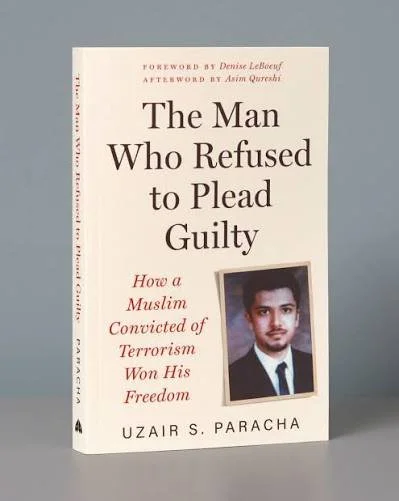
For years, others told Uzair Paracha's story for him and fashioned it as a cautionary tale about falling into the wrong company or developing extremist tendencies.
They got it wrong.
Today, his memoir is not an attempt to recover the years he lost. Rather, it is an attempt to reclaim something else:
his own voice.
Uzair Paracha’s memoir is available to purchase here.