
The Art of Translating
I left my first therapy session angry.
I was sixteen when I first went to a psychologist.
I was sent there as a last resort, as, at that point, my parents didn’t know what else to do with me. They took me there with the uneasy sense that something foreign had corrupted me and with the belief that the West had turned me weak.
Therapy has always been presented as the answer, the place that you turned to when nothing else worked. Before my first session, I remember believing, hopefully and a little naively, that if I could be understood anywhere, it would be here.
What I hadn’t been prepared for was how exposing it would feel. I was expecting to talk about myself, but within minutes, I was being asked about the people who raised me. I hadn’t anticipated that explaining my mental health meant exploring theirs first.
The more we spoke, the more defensive I became. It happened almost instinctively. I wanted to interrupt every sentence with the same thought: “It’s more complicated than that”. I could feel myself being legible in a narrative that was all too familiar. Another immigrant household, another case of a controlling family, the classic brown kid with strict parents trope.
I remember the rush of panic every time my therapist would start writing something. I would describe something, then immediately worry that I had left out the context that had made it understandable. I remember telling her,
“Wait, let me reword that”
“That came out wrong”
“Can we ignore that, actually?
Yes, my parents had hurt me. But they also left behind everything they knew to build a better life for us here. Yes, their expectations weighed greatly on me. But their actions were built by protection, love, and fear as much as they were by control. I wasn’t trying to excuse them completely; I was trying to keep them from being flattened into something that could fit in a fifty-minute appointment.
When the first session ended, I walked back into the waiting room, where my parents were waiting.
Sitting in that space and being expected to speak so casually about everything I had been taught to suppress felt too confrontational. The more vulnerable I felt, the angrier I became. But underneath that anger sat the familiar disappointment of being misunderstood all over again.
It took me several more sessions before I realised that what I was feeling was more than just discomfort. It was the jarring experience of trying to understand myself through two different emotional languages at once.
“Individualism can become isolation just as easily as collectivism can become self-sacrifice. ”
At home, I had always been taught that reputation mattered. That disagreements were to be kept within the private walls of the home. That certain things weren’t meant to be spoken aloud. That protecting the dignity of your family was never presented as a choice or a rule; it was simply absorbed as common sense.
Growing up, feelings were not named or explained. They were endured, carried in silence, or expected to pass with time. Therapy itself was something spoken about with suspicion, if it was ever spoken of at all.
“But you’re not crazy”
“That’s a white people thing”
“But we’ve given you everything”
Mental health wasn’t absent from my home. It was interpreted differently.
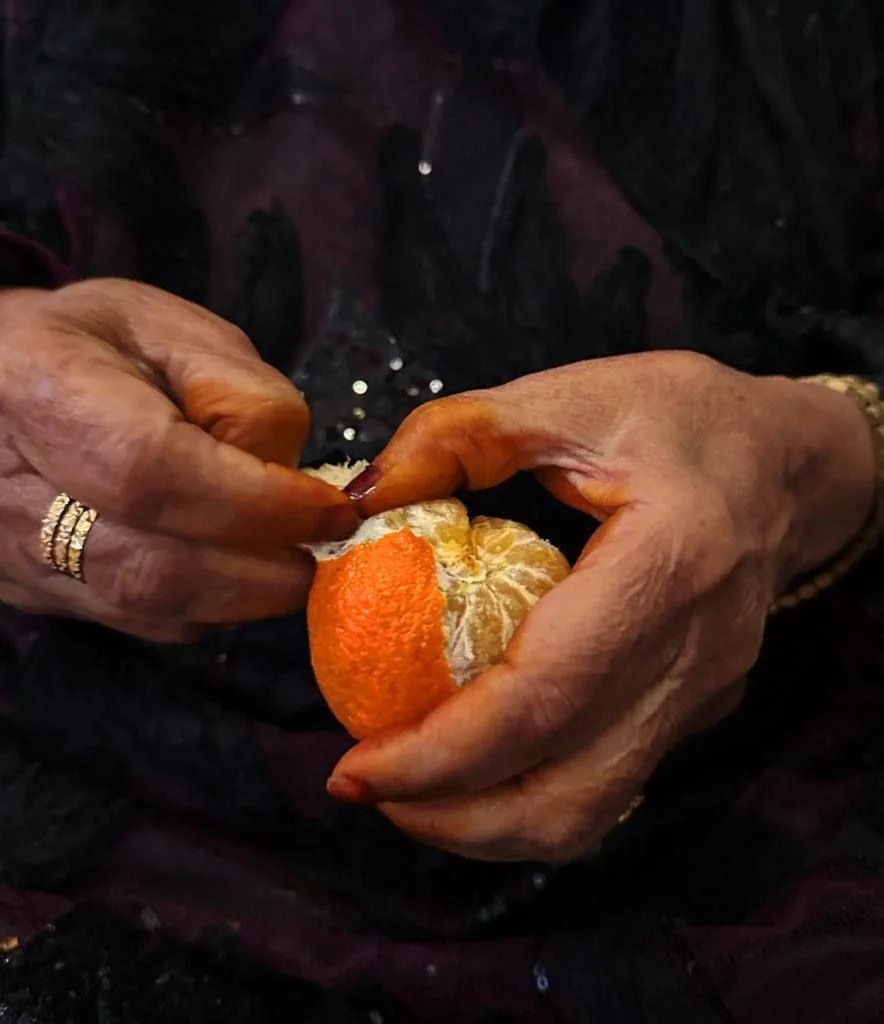
Disputes rarely ended with long conversations or apologies. A favourite meal would quietly appear in the kitchen. Nobody announced that they loved you often, but they worked overtime for you, building entire lives on your future. Care was rarely shown in the way I wanted it, but still, it was practical and persistent.
Therapy introduced me to a different worldview.
There, I heard phrases that have become almost synonymous with modern therapy.
“Protect your piece”
“Set boundaries”
“Put yourself first”
None of those ideas were inherently wrong.
Some of them even helped me.
What bothered me was the quiet assumption beneath them.
Those ideas stem from an understanding of the self as something fundamentally individual. The person is the primary unit of care, with wellbeing understood in relation to their own needs and choices.
Collectivism begins somewhere else.
It understands people not as isolated individuals but as relationships. Your identity is inseparable from everyone around you. Your wellbeing is connected to theirs just as naturally as theirs is connected to yours.
Neither of these forms of thinking is inherently more enlightened than the other.
Both have faults.
Individualism can become isolation just as easily as collectivism can become self-sacrifice.
Yet, only one of these is routinely presented as the universal language of mental health care.
That was the friction that I couldn’t name, sitting in that therapy room.
“I’ve come to realise that you can physically arrive somewhere and still feel as though there is no language for the world you’ve come from. ”
The advice I was being given wasn’t difficult because I was electively choosing to reject parts of it. It was difficult because it had been developed with a cultural framework that wasn’t my own, and I was being expected to adopt it.
Western therapeutic models are often culturally incompetent, not because they lack the ability, but because they mistake individual beliefs for standard truths. The problem wasn’t that one worldview was right and the other wrong; it was that both assumed it was a universal language.
In a literal sense, therapy was accessible to me. My parents could afford it, I wasn’t put on a waitlist, and the clinic was only fifteen minutes from home. All the practical barriers had been removed.
Yet, I’ve never been able to describe therapy as truly accessible.
I’ve come to realise that you can physically arrive somewhere and still feel as though there is no language for the world you’ve come from. At home, there was no vocabulary for mental health. In therapy, there were words for everything, but not for the culture that shaped me. By the time I’d translated my world into something that could be understood, there never seemed to be enough time to talk about me.
When I eventually decided to stop going, much earlier than I probably should have, my parents were relieved. They never outwardly said so, but they didn’t need to. The house felt lighter. It meant we could return to the routines and unspoken understandings that held us together. Therapy represented uncertainty, inviting strangers into intimate parts of our lives. My silence, by contrast, was familiar. To them, stopping therapy didn’t mean I had stopped hurting. It meant my pain could return to being something we carried quietly.
For a long while, I told myself that therapy hadn’t worked. But that isn’t completely true.
Therapy changed the way I spoke to myself before it changed the way I spoke to anyone else. It helped me pause before reacting, recognise guilt before it became obligation, and understand my emotions before carrying them into conversations at home.
“Therapy should not ask us to trade our cultural identity to heal. It should be expansive enough to recognise that people do not arrive alone. ”
I never brought therapy home in the language it was given to me. I didn’t talk about boundaries and protecting my peace. Those concepts did not belong to the emotional language of our home.
Instead, I translated them.

I learnt to process conflict through the techniques therapy has taught me, before returning to my family in a language that still felt like ours.
At times I still find myself wondering what my first experience of therapy would have been like if I had found someone who shared my cultural context.
I imagine that my parents might have trusted the process more if they had seen themselves reflected within it, rather than quietly threatened by it.
Children of immigrants are often described as living between two worlds. But we deserve to heal without feeling that we must leave part of ourselves outside the room. Therapy gave me language for things I had never known how to name. My upbringing gave me values that I have never wanted to lose.
Therapy should not ask us to trade our cultural identity to heal. It should be expansive enough to recognise that people do not arrive alone. They arrive carrying families, histories and ways of understanding the world.
Healing isn’t found in choosing between two emotional languages. It’s in finding that they were always capable of speaking to each other.