
The Eastern Film Society: Building Pillars of a Community
Naomi Bal works in communications, but really just lives for stories! With Punjabi roots across Pakistani and Indian heritage, she's on a journey with identity, nostalgia and sharing the narratives that connect us to where we have come from.
The younger generation in the UK is at a loss for the meaning of the word "community" (I am one of said "younger generation"). We have become so caught up with trying to survive a neoliberalist society, where our worth and feeling of belonging are only satisfied by being the best and consuming the most. In fact, when it comes to building those connections with others, perhaps inconveniencing ourselves to help one another, it can feel so inorganic. This new way of living, coupled with being South Asian, has made me feel really out of place. It feels like a borderland, where our culture is intrinsically collectivist, yet we are trying to live amongst an individualistic society.
Looking back, our parents and grandparents really valued community during tough times. Many of them migrated to the UK from South Asia in the 1950s/60s, and were met with extreme hostility and racism. This made mutual support a vital source of comfort, survival and a sense of home. As later-generation British South Asians living through renewed economic and political uncertainty, this history of mutual support feels less like the past and more like a reminder of what community has offered in moments of instability.
Feeling somewhat lost in the world at large, I often get caught up in my father's random, nostalgic thoughts as a form of escapism. It was one afternoon when he mentioned to me about a local pub in the 80s that would screen the latest Bollywood releases. He exclaimed how the pub would be "packed out", and I was intrigued to learn this, especially being a film lover myself.
A brief but unproductive descent into online research reminded me that not everything lives on the internet, so I headed to the Wolverhampton Archives – where I uncovered the Eastern Film Society (EFS).
The Inception of EFS
The EFS, first formed in 1956 (long before the pub screening days!), was the "brainchild" of a young man called Gurdial Singh Sahota. Gurdial was a factory worker in Wolverhampton and an avid film lover with a passion for writing. Like many other South Asians living in the area at the time, Gurdial struggled to find a suitable leisure space for his days off. His white British counterparts would often head down to the local for a Saturday night pint, but he and many other South Asians didn’t drink. The overt racism towards migrant communities in 1950s Britain meant that these environments were often quite hostile. It was then that Gurdial recognised the gap and developed an idea to unite his people through the very thing that he loved most – the cinema.
Gurdial recruited his peers Jaswant Sidhu, Gurmit Singh Tooth, and Gurmit Singh Sidhu; together, they formed the EFS. Bounded by the challenge of assimilation and their love for film, the group wanted to leverage the small privilege that they had to improve the lives of other South Asian migrants in the UK.
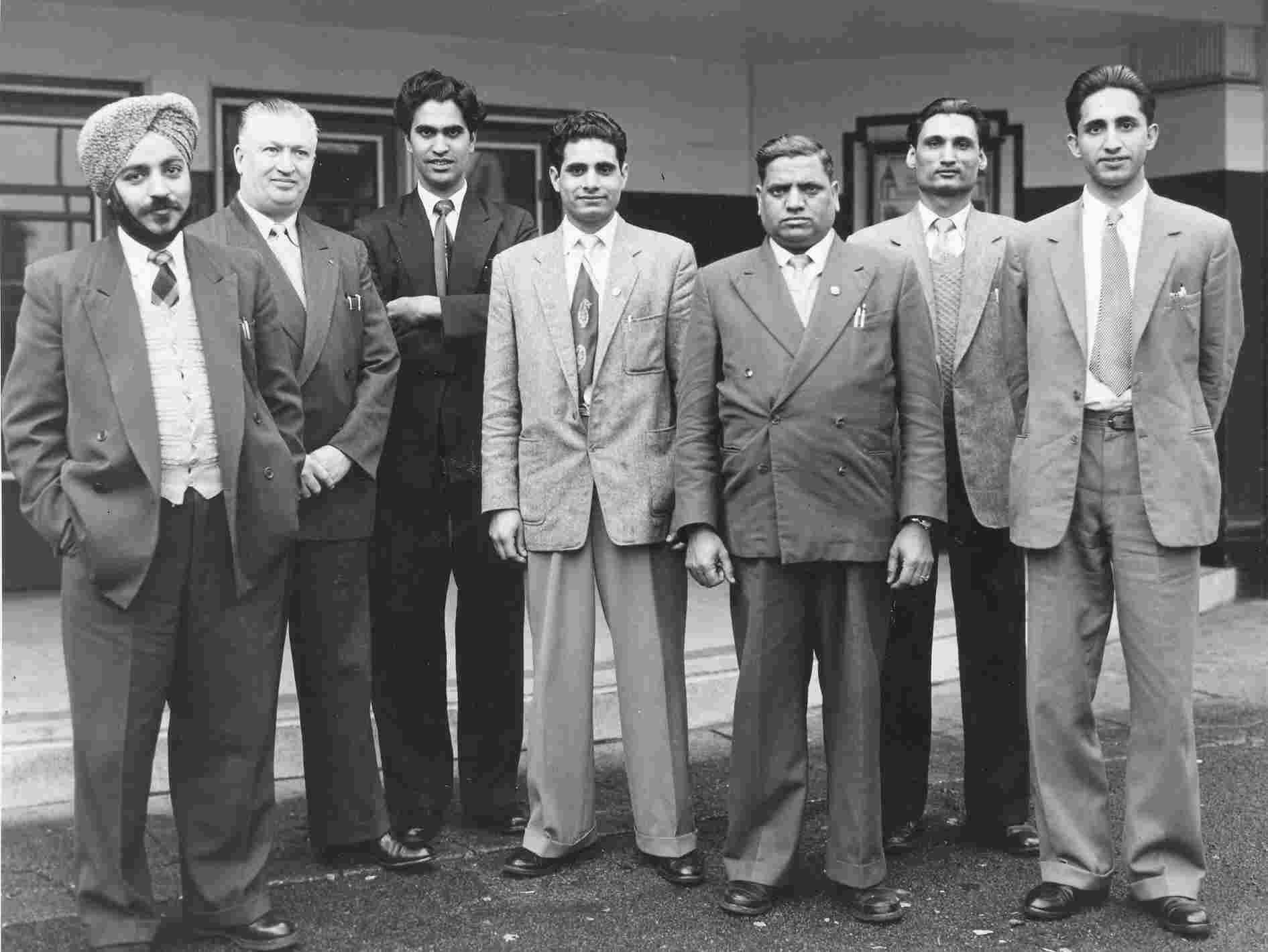
The Eastern Film Society, pictured with additional gentlemen, and with Leslie Taff (from the collection of Ned Williams)
The EFS began with a simple yet powerful idea: bringing the latest South Asian films to audiences at a time when finding them was nearly impossible. For their first screening, they hired Wulfrun Halls in Wolverhampton, a city-centre venue known for its rich musical history. It was hugely successful, and the demand for more screenings led the group to secure a monthly Sunday morning slot, where they continued to play movies and attract South Asians from across the West Midlands and beyond.
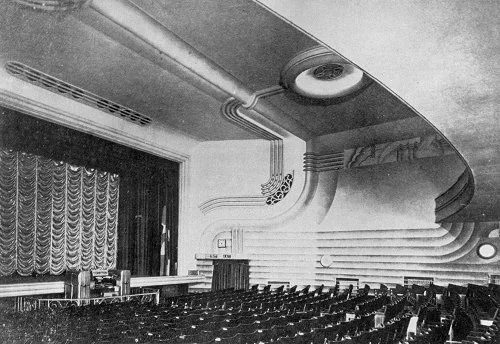
Regal Cinema, Pinfold Street, Darlaston. Source: Cinema Treasures
As audiences grew, the need for a larger venue became clear. After a brief search, the group found the Regal Cinema in the nearby area of Darlaston. True to its name, the building was grand, with a circular foyer, ample seating and soaring ceilings. They soon met the owner, Leslie Taff, who was well-versed in the legalities of the film industry, and quickly became a valuable ally.
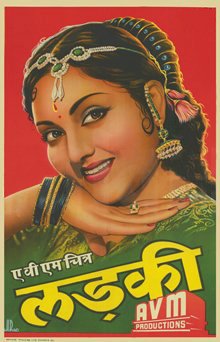
Ladki Film Poster: Source: Somindram
The first film screened at the Regal was in 1953, Ladki, a romantic comedy starring Bharat Bhusan, Kishore Kumar, Vyjayanthimala and Anjali Devi. It drew 300 people, a promising start for the EFS's tenure at the Regal.
With demand increasing, the showings went from monthly to weekly, and even daily, at least three nights of the week – showcasing the hit movies of the time, such as 1958 Amardeep and 1964 Sangam. The EFS even hosted massive movie stars for film premieres, including I.S. Johar, who was filming Lawrence of Arabia at the time, as well as the stars of Mother India, one of the most famous Indian films of the 1950s.
The group soon moved to the Alhambra Cinema in Bilston. At first, they hired the cinema, but later they bought it! Continuing their streak of showcasing South Asian films.
As the months played out, what began as a humble and informal "link up" to share space and watch films soon grew beyond screenings, earning recognition even in the homelands.

Pictured L-R: Gurdial Singh Sahota, I.S Johal, and Jaswant Sidhu (from the collection of Ned Williams)
Grassroots Work Commences
Following a series of successful industry ventures, the EFS found itself in a strong and stable financial position. This leverage of income allowed them to pursue what they wanted to do with the whole project- to use the profits to support the South Asian community. In their 1959 report, Gurdial stated that the EFS "seeks to promote international understanding, peace and good through the medium of the cinema screen".
The group began reinvesting profits directly back into the community. They funded an English class at the Commonwealth Centre in cooperation with the Wolverhampton Local Authority, supplying everything from furniture to stationery. Learning also returned to the cinema itself, with short English lessons shown before screenings and a small library of books, magazines, and South Asian literature was set up in the cinema foyers.
The Decline: The End of EFS, and the Death of Gurdial
As VHS rose in popularity in the 1980s and films increasingly moved into people’s living rooms, the communal act of watching together began to thin out. After more than 30 years of screenings, the EFS chose to end its run with a final showing at the Wulfrun Hall in 1981, returning to the space where it had first brought people together.
Gurdial passed away in 1993, but the spaces he and the EFS had helped to create did not disappear with him. EFS-style screenings briefly resurfaced at another local cultural spot – The Lighthouse. The opening of the Wolverhampton Cineworld saw three screens dedicated to South Asian films; small, almost remarkable gestures that nonetheless carried the weight of everything that had come before.
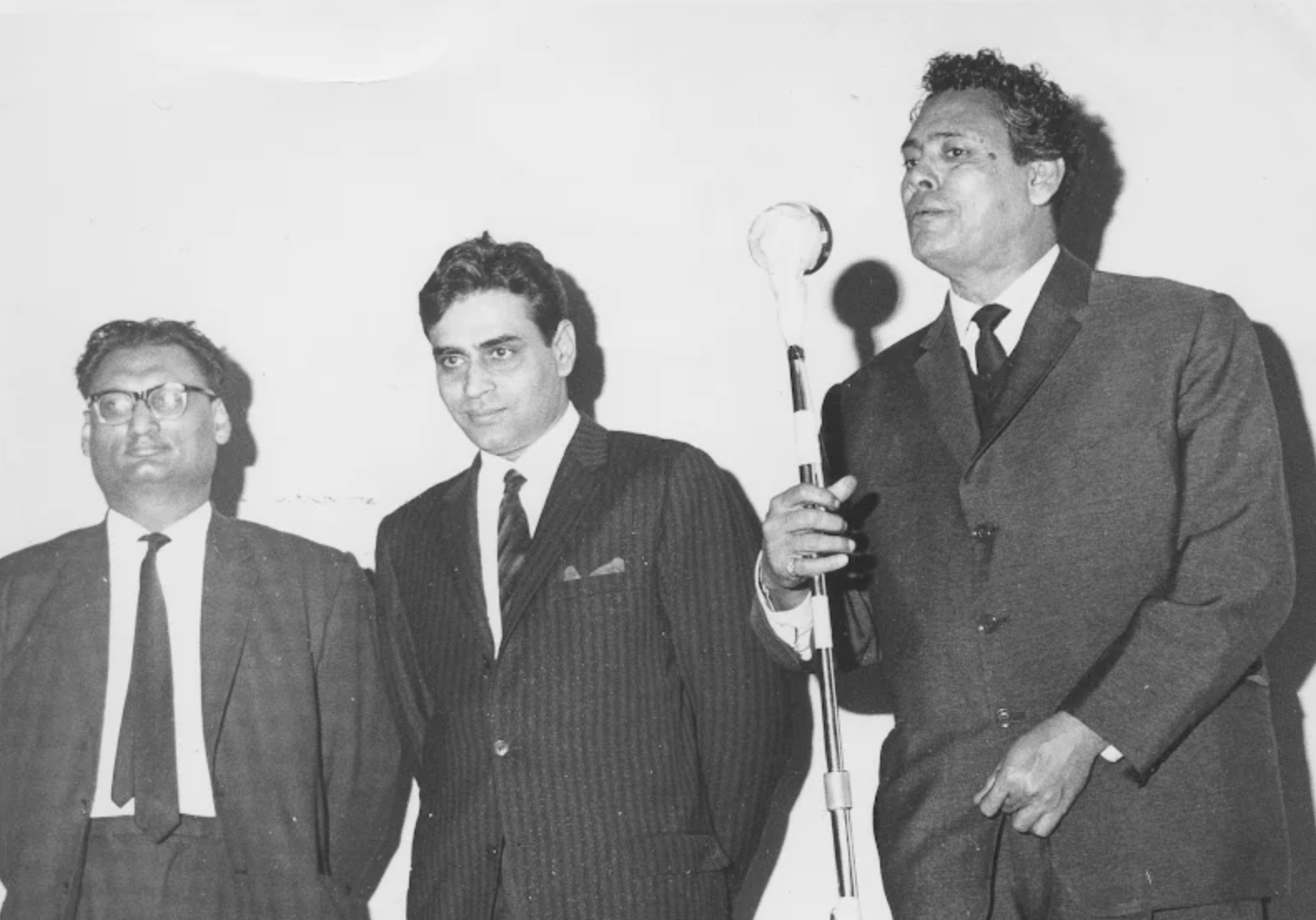
Pictured L-R: Gurdial Singh Sahota, actor Rajendra Kumar, and poet Hasrat Jaipur at an EFS premiere (from the collection of Ned Williams)
Thinking about community now, I recognise the same uncertainty that shaped earlier generations, a sense of being slightly unmoored and a quiet desire to belong to something built with others rather than alone. If those before us could turn small passions and limited privilege into spaces of care and connection – what might that look like today, not just for our own community, but for others navigating similar challenges? How might we use what we have, whether time, skills, or creativity, to build structures that support one another, especially in moments of fear or instability?
Even in the borderlands we inhabit today, it is often the smallest, most consistent grassroots acts of care, as the EFS modelled, that anchor us to one another.