
A Love Letter to Brown Womanhood
We spoke to Eliza, a NYC-based artist whose work centres on the romanticisation of South Asian women, and uses her art to reimagine a world where brown women unapologetically take up space and reject colonial beauty standards. Each piece begins as a quiet protest against colourism, visibility and the narrow standards and expectations imposed by dominant cultures, ultimately serving as a love letter to her younger self.
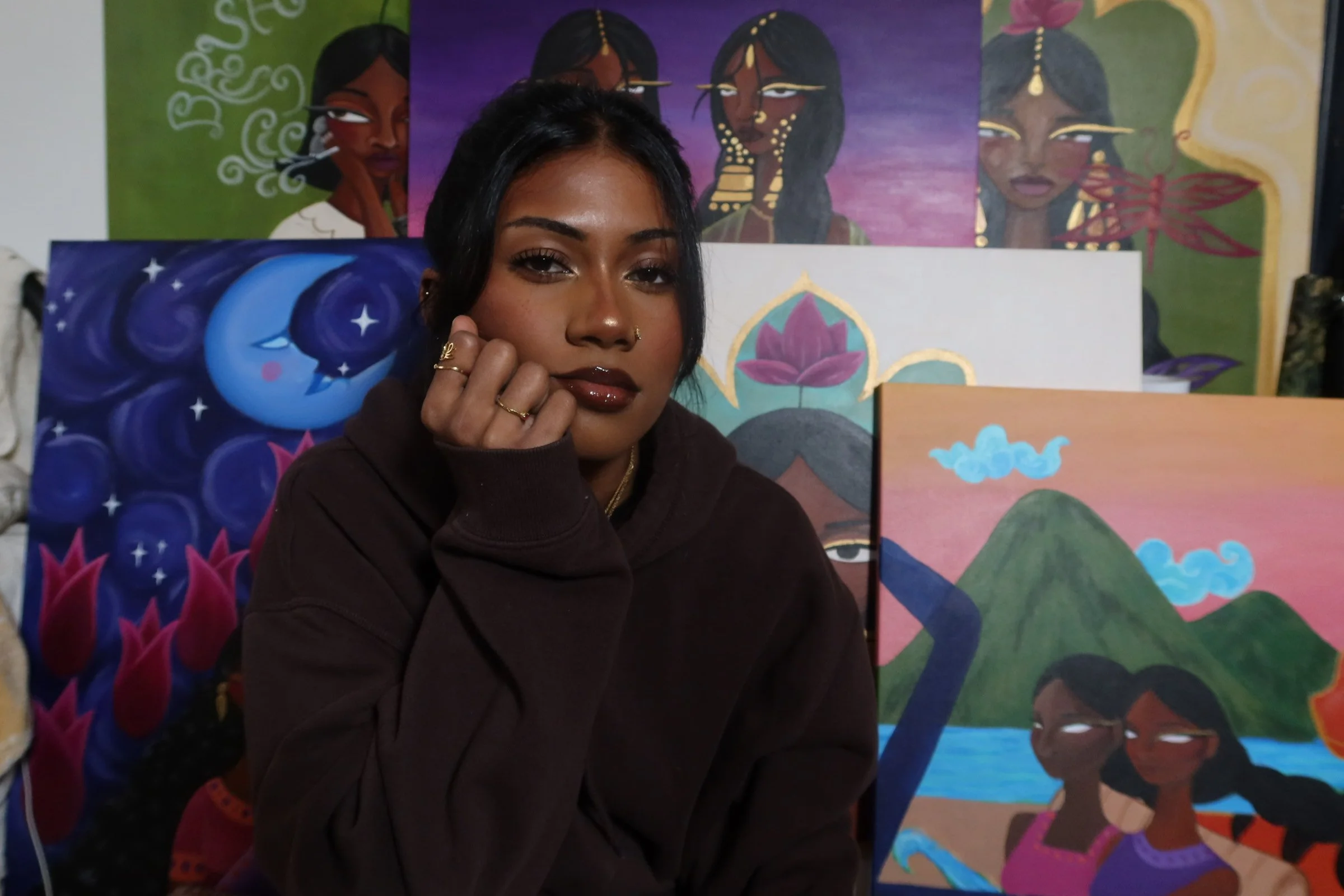
Can you tell us a little about your journey into visual art – when did you realise this was the language you wanted to speak in?
I've been drawing since I was a child, actually, but I never took the energy to develop that side of myself, as I was told it held no value, so my creativity stayed in sketchbooks. Then, about a year ago, I reached a point where I felt like I had hit rock bottom. I was unsatisfied with where I was in life, my career, my mental health, and the general trajectory of my life, and I realised the only thing I had left was my drawings.
I've worked as a makeup artist, a model and a photographer and realised just how misrepresented and excluded we are. I understood how difficult it is to thrive in the creative industry as a darker-skinned South Asian woman.
Storytelling through art came naturally to me, and posting it online allowed me to see how valuable my art is, as people all over the world were able to relate to this experience.
“The brown women I paint are complex, sensual, dreamy; it’s an expansive narrative rather than a limiting one because that is who we are. ”
Do you have a favourite piece, and why?
My favourite piece has to be a painting I made called 'Sunset Babes'. It's just two brown baddies wearing huge jhumkas, with a sunset background – just women existing freely and wearing whatever they want, performing no specific role for society.
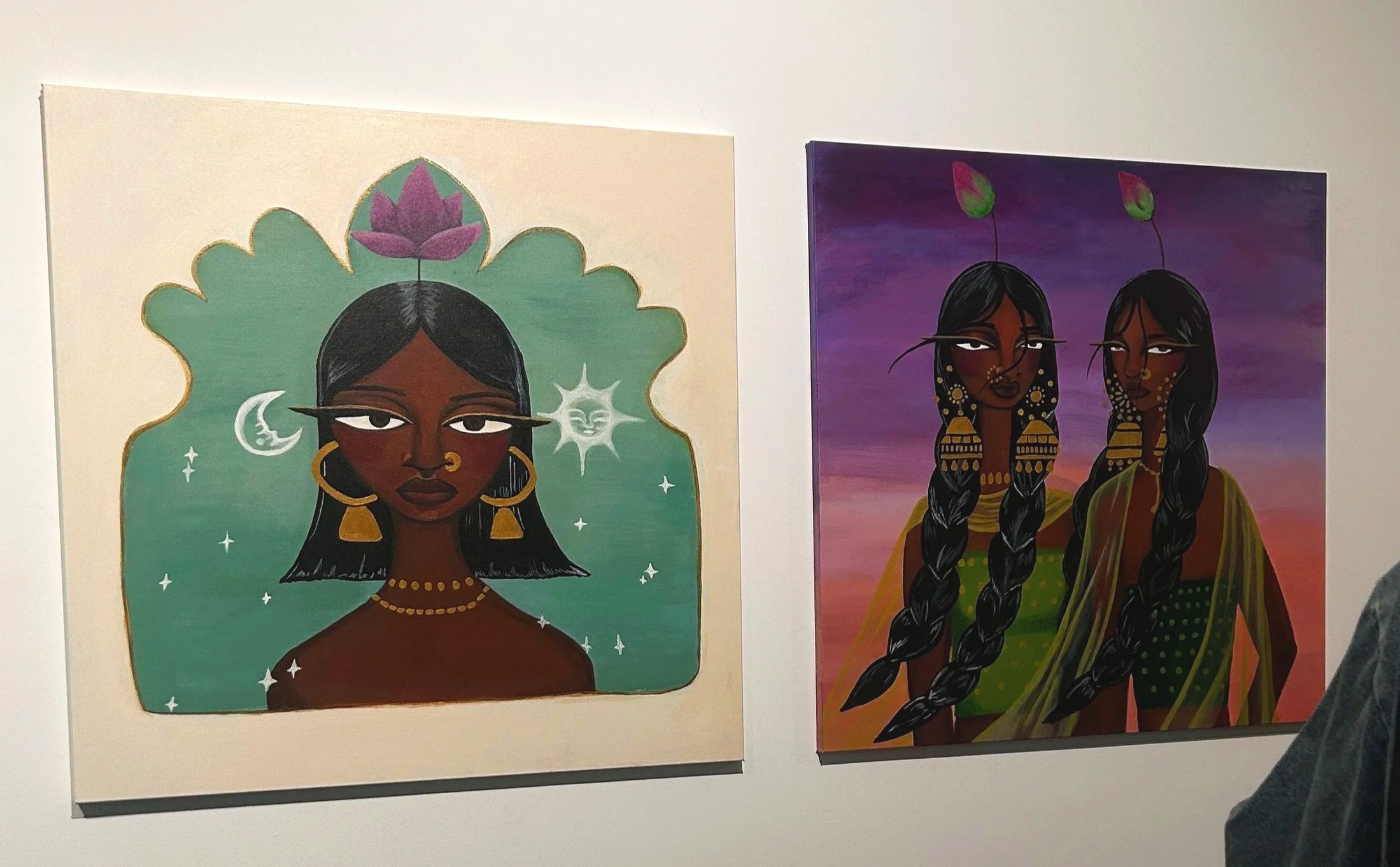
You describe your work as being centred around romanticising South Asian women. What does that phrase mean to you, and why did it feel important to centre your practice around it?
"Romanticising South Asian women" to me is rewriting the identity from one that has been historically portrayed through the narrative of duty, sacrifice and tradition into a narrative that includes inclusive beauty, intimacy and sometimes self-indulgence.
The brown women I paint are complex, sensual, dreamy; it's an expansive narrative rather than a limiting one because that is who we are.
Centring my practice around this felt important and natural because representation shapes how we see ourselves and what we believe we're allowed to desire or become. Growing up, I rarely saw South Asian women with agency, and darker-skinned women didn't even exist in South Asian visual media. My work creates a world where women like us are seen, admired and free, a world I knew my younger self would have loved.
What does letting go of colonial beauty standards look like for you? Was this a question you first had to ask yourself?
To me, letting go of colonial beauty standards has been both internal and external; it's unlearning the instinct to make my subjects more "palatable" and acceptable to a Western gaze. It’s questioning why certain features and practices were once considered something to change or hide, and choosing to celebrate and centre them instead. I grew up learning certain ideas through (both Western and Indian) media that were shaped by colonial history. I started questioning these standards as soon as I realised that, as a melanated woman, I could not thrive in these spaces, let alone as a creative.
My work isn't about rejecting Western standards for the sake of rebellion. It's about knowing and reminding us of our own beauty and rewriting who we are, as we have been historically devalued.
“Representation to me is about resonance and not performative. ”
How did colourism and dominant beauty narratives shape your early perceptions of yourself and other women?
Colourism and the dominant beauty standards negatively shaped my early perception. Features that are in proximity to Eurocentric standards were often positioned as more desirable and worthy of love and respect. I noticed how certain women were praised for being "fair" or "presentable", while others were expected to compensate through achievements. This hierarchy is limiting and unfair to everyone. It creates a sense that love and respect are conditional and something to be earned by changing or hiding parts of ourselves. This narrative is rooted in colonial history and is reinforced through media, art, representation and even family conversations.
My art is a way to heal my inner child and to disrupt the culture.
Do you think representation is still about visibility, or has it shifted towards something deeper?
I do think representation has moved beyond visibility. I think we need the type of representation that doesn't fall into a limiting narrative. I'm interested in our depth and freedom of expression. Representation to me is about resonance and not performative.
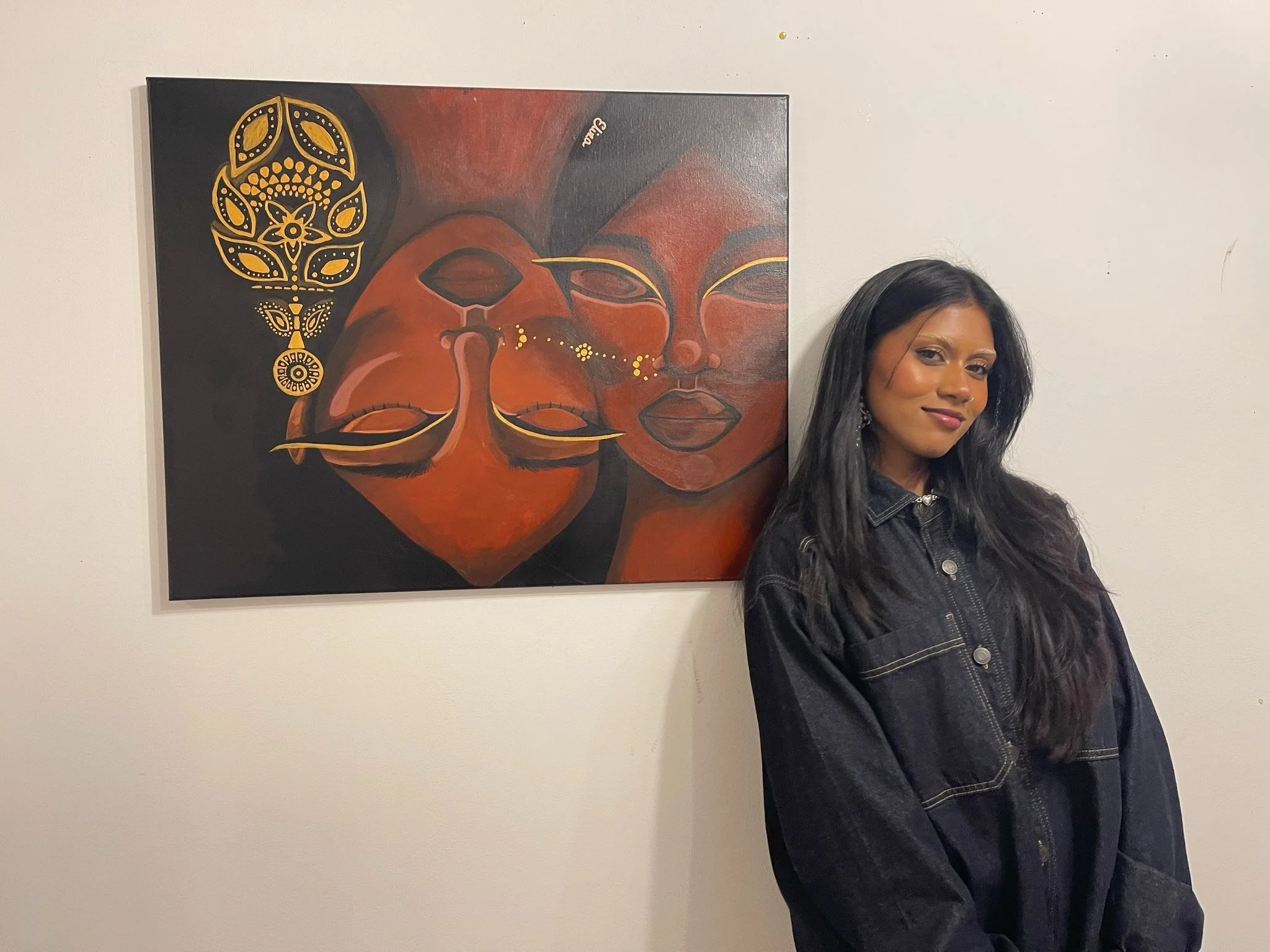
What narratives about South Asian womanhood do you feel most urgently need rewriting?
Ooofff, the narrative where South Asian women are reduced to only duty and endurance and, for some reason, "moral symbolism", rather than individuals with interior lives, desires and complexities. This flattens our experience as people. I don't like how our worth is tied to respectability, which is based on how modest, obedient, or "presentable" we are. This polices how we express ourselves, affects our confidence, and limits our ambition, leaving no space for rest, pleasure and finding and discovering ourselves.
The women I paint are not performing any roles and not explaining themselves; they are freely expressing themselves.
What does “taking up space” look like for you right now – creatively or personally?
Taking up space for me creatively means trusting my instincts and not over-explaining myself. It means creating without considering the outcome. Knowing that what I do is for little me. Personally, it's about growing at a pace that is sustainable and not meeting certain standards.