
Crossing Borders, Carrying Culture: Being British Asian in France
France and England have never had a stable relationship. With the culture clashes, the intertwined histories, and the sheer geographic closeness, there comes inevitable friction between the two countries. I recently ended up inadvertently testing the waters of this tension even more by adding my British Asian-ness into the mix when I moved to Paris in September for my year abroad. By being there for just under 4 months already, the interactions I have encountered are too interesting not to reflect on.
I moved by myself, having no one to talk to about what being brown in France would be like, where the minority was largely people of African ethnicity. So, even before I got there, I knew that being even more of a minority in relation to others would take some getting used to. I was going to have to be my own guinea pig — and, in some ways, a test case for others like me — experiencing what it means to be Indian in a country with far fewer people who look like me than in the UK. It was, and still is, an opportunity to discover the restraints and nuances of behaviour that I receive in comparison to my European, American, and British white peers. But I can’t really speak for the whole of France on this, even though it may be a similar experience.
The Trouble of British or “Other”
In Paris, even doing the most “typical” daily life activities like using the metro, going to cafés, and walking in the park can make me feel more aware of my identity than ever. I can also feel misunderstood. So far, interactions with the French have been a hit or miss — but I already knew that. Having studied the language since secondary school, I was conscious of the stereotypes surrounding the French, but I chose to go to Paris with a clear mind, remaining vigilant without jumping to conclusions.
After living there for a while, though, I was forced to question how the French see me. British, or as something else entirely? I have had encounters where my ethnicity has answered to their presumptions before I have had the chance to assert myself. This is something I have never needed to think about in the UK, until more recently, perhaps. I slowly began to understand that the French can sometimes assume that I couldn’t possibly be French or speak the language, since the Indians who live in France are mostly from South India, who tend to have darker skin than I, as a Gujarati woman.

Speaking is Political
And so, of course, when I try to speak French, they can sometimes respond to me in English. Most of the time, I try to persevere and respond in French. However, there’s no denying that I can get met with hostility. I still remember the encounters where I was met with pure shock and disbelief that I could speak French and be Indian, to the extent that someone once mistook me for being mixed race (half white & half Indian). But the times that I do respond in English, of course, with a British accent, I also put myself at risk of hostility. Don’t get me wrong, though, I have spoken to some really nice people who have let me practise speaking French, which honestly makes my day because it doesn’t happen often. But, with the other encounters, it did get me thinking…
They don’t like it when I speak French, and they don’t like it when I speak English. I can’t seem to win. And that’s when the sense of impending doom crept in, as it was clear I was never going to properly “fit in”. I then started to wonder why my flatmates, who all come from different countries and who know just as much French as I do, can “pass” as French more than I can, and why they are given more of a chance to speak it more than I am; the common thread being their whiteness.
It sounds obvious when you think about it, but being exposed to it and realising it in person is a whole other thing. Despite being born and raised in the UK and growing up immersed in British culture, white people have the privilege of concealing themselves within a Eurocentric belt that I don’t have access to. Through certain eyes, I am only allowed to be Indian, and my ethnicity speaks for me. The concept of being British Asian, or from the diaspora, may not make sense to them.
We do not exist to fit in a box.
From my experience, I have realised that you can’t educate someone who isn’t willing to listen. The privilege of my white counterparts is something that simply must be accepted, as there is no knowing whether this will ever change, not just in France but around the world, if we consider the current political climate in Western countries that is being dominated by racist and anti-immigrant rhetoric.
But there is a hidden power to be gained from that. If this attitude knows little change, rather than silencing your identity and attempting to neutralise yourself to blend in, why not shed light on what already stands out?
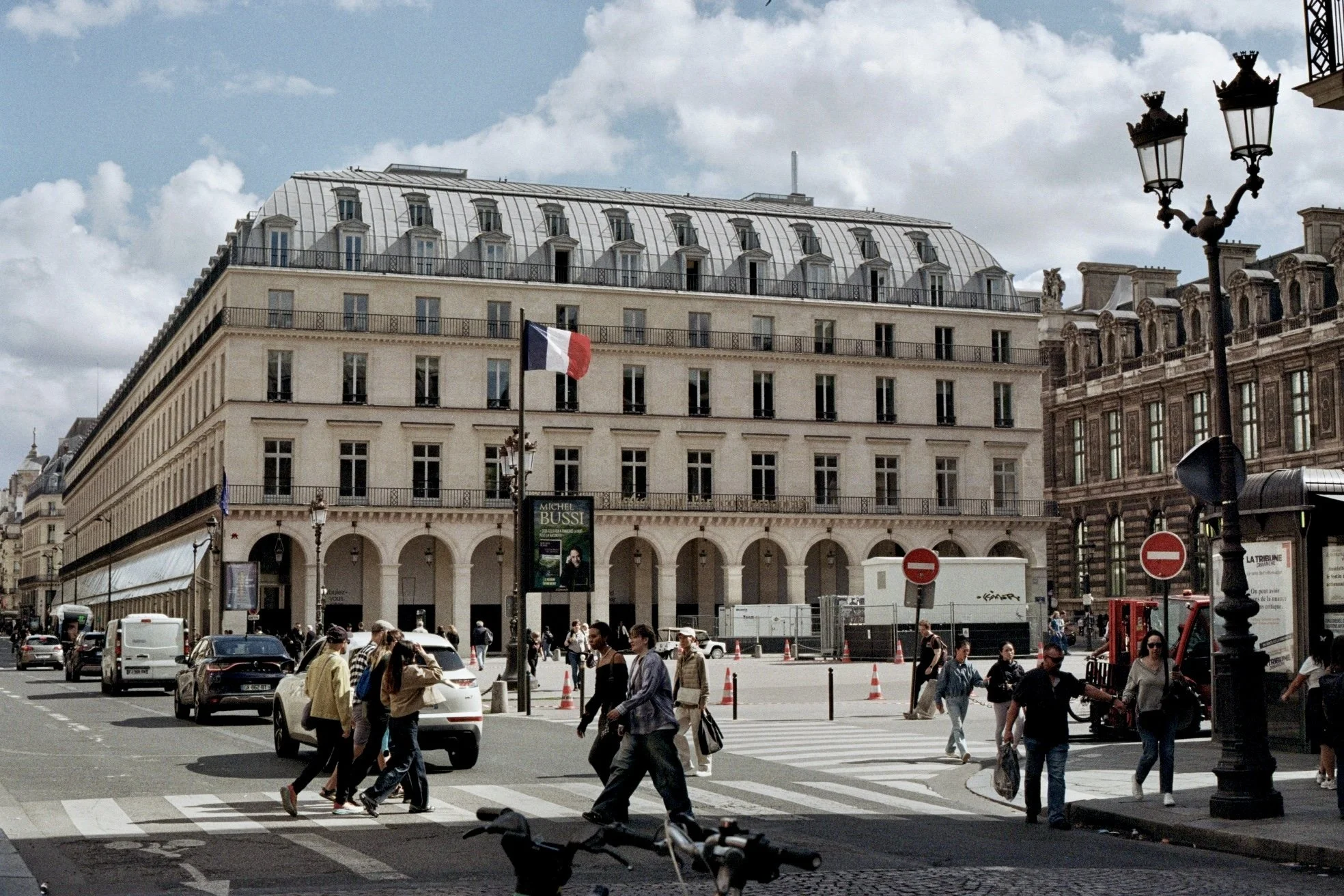
From my time at university, I have learnt that being unapologetically yourself will always attract the right people to you. So, that’s what I did. And eventually, I got used to the sharp tongue of the French. Instead, I take it as character building as their assumptions ultimately hold up a mirror to themselves, not to me or my community.
Going to France has made me even more aware of my identity as a British Asian and the importance of using it as a tool to empower myself. Though I’m mostly asked about topics associated with British culture when I’m there, I still find ways to acknowledge my Indian roots and tell the stories that are relevant to the diversity that must be celebrated more in the UK.
What I carry forward
Being from the diaspora doesn’t disqualify you from being Indian. Nor does being Indian disqualify you from having a diasporic tie to another country. Everyone is made up of their own rich tapestry that cultural, social, and political complexities are woven into. Everyone is deserving of that. We were never meant to fit in a box, especially not one contrived of Eurocentric ideals.
A great and most recent example of this in our community is the newly inaugurated (first- ever South Asian) Mayor of New York, Mr Zohran Kwame Mamdani. Mamdani is a man from the diaspora himself, being half-Gujarati, half-Punjabi, and raised in Kampala, Uganda. The pure determination through his mayoral campaign, his unashamed pride in his diasporic identity, and his clear intention to dignify our community (as much as the many other underrepresented and marginalised ones in his state), all whilst smashing stereotypes and battling the harmful assumptions launched against him, is something we can all be inspired by. His story shows that holding multiple identities – South Asian, Ugandan, Muslim, Immigrant, and New Yorker – can coexist loudly without needing to shrink to be more “palatable” for others. And it is this audacious type of diasporic belonging that I now keep with me as I continue my year abroad journey, and thereafter.