
Blue Mist: In Conversation with Mohamed-Zain Dada And Milli Bhatia
Blue Mist, written by Mohamed-Zain Dada and directed by Milli Bhatia, first premiered at the Royal Court Theatre, earning a nomination for Outstanding Achievement in Affiliate Theatre at the Olivier Awards. Now coming to Leeds Playhouse (17–20 June), the acclaimed play follows friends Jihad, Rashid and Asif as it explores friendship, ambition, and the power of storytelling from within the walls of Chunkyz Shisha Lounge.
Challenging the media narratives often imposed upon Muslim men, Blue Mist feels as urgent and relevant today as ever.
We caught up with long-time collaborators Mohamed-Zain and Milli to discuss Blue Mist, their creative partnership, and how their work comes together across projects.
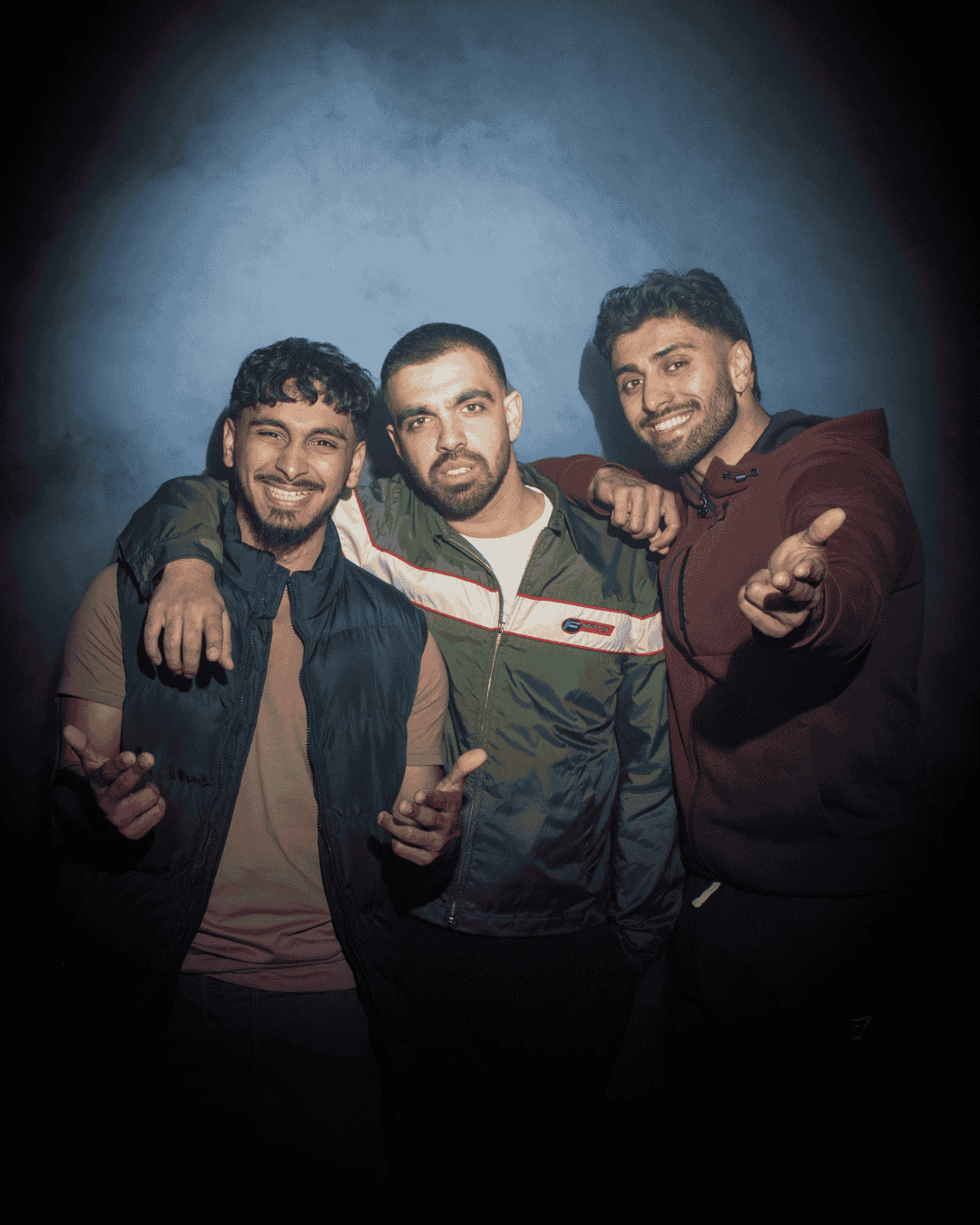
Photography: Mathushaa Sagthidas
How would you describe Blue Mist in one sentence, and what kind of experience are you hoping audiences walk away with?
ZD: Blue Mist is an urgent and funny play about three young Muslim men in a shisha lounge, navigating friendship, faith, masculinity and the stories the world keeps telling about them.
When the play had its premiere in October 2023 at the Royal Court, the conversations were really wide-ranging, from our own complicity to this real sense of appreciation for lounges like Chunkyz.
MB: The tension between ambition and integrity, and whether it’s possible to thrive within a structure that wasn’t built for you; can you really dismantle the system from inside it?
At its heart, Blue Mist explores who gets to tell stories about Muslim communities. What conversations are you hoping to spark with this piece?
ZD: First of all, we want audiences to have a good time. One of my favourite Sarah Kane quotes is "Why can't theatre be as gripping as footie?" Going to see a show should feel like a fairytale. It takes a lot to leave your house, and you want to feel entertained.
MB: Hard agree. I read John McGrath’s A Good Night Out early in my career, which informs a lot of how I think about audience engagement and why theatre. Blue Mist is hilarious; it still makes me laugh three years later, and it’s theatrically ambitious and epic. There are a few surprises…
And its theatrical language has been built from a range of references from memes, to music videos and horror films.
I think the play, in many ways, is an antidote to the harmful and stereotypical rhetoric that can exist around Muslim men. It really centres their joy.
“Some people have a pint, some people have a pipe”
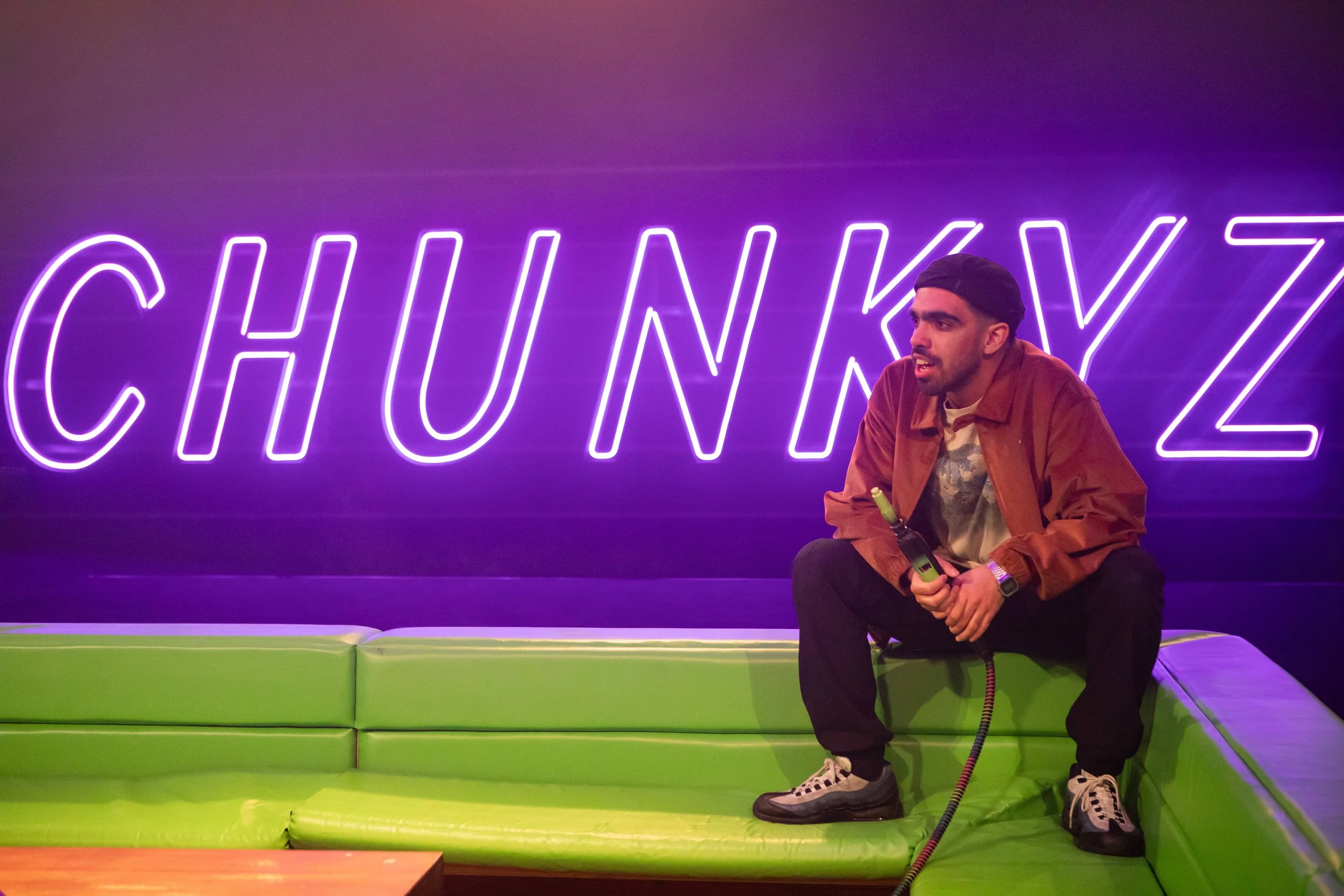
Photography: Ali Wright
Chunkyz Shisha Lounge feels almost like a character in its own right. What inspired the setting, and what does that space represent within the world of the play?
ZD: Chunkyz is an amalgamation of a lot of different places.
I remember my first trip to a shisha lounge was actually to Trocadero (back when it was an arcade) in Leicester Square. You could smoke indoors in those days, and I remember being properly keen to try the shisha whilst my cousin was smoking. Going to smoke shisha ended up becoming the standard 'Friday night' spot with friends in London through my twenties. I think the reason was that none of us really grew up going to pubs, and either lived with our families or in flats that were too small for a group of us to hang out in. So a shisha lounge became the default motive.
I ended up visiting lots of weird and wonderful spots from Egyptian House in White City (Uncles and backgammon energy) to the venue with live Arab singers in Park Royal behind the Asda, where the owner has a pet parrot (true story). There is the Jerusalem Lounge in Shepherd's Bush, which has two resident cats and a secret library full of Palestinian literature and Beit El Zeytoun, which feels like you're in Beirut.
What's amazing about them is you might be in an Industrial area of North West London or Bradford, and you go into some narrow entrance of a building, and you're suddenly transported to somewhere new. Jihad describes them as the 'borderlands', and I'd agree with that!
MB: I love that speech about borderlands, it’s a beautiful piece of writing. “The idea that immigrants channel their longing into the spaces we end up calling home. And through that process, end up creating somewhere new. I call these spaces the borderlands. A place for people who have to spend their life on the margins”.
It’s a safe space for these boys, and a lot of us grew up spending time in them with our friends. One of my favourite lines in the play is “some people have a pint, some people have a pipe”.
“I think we’re living at an extremely troubling time where dehumanisation is the default position of many mainstream media platforms.”
What conversations or questions do you hope audiences will leave the theatre with, especially in a time where media narratives feel increasingly contested?
ZD: I think a lot has changed in 2 years since the play was first produced. One of the themes of the play is about how stories are imposed on you and who is afforded care, context and nuance. This feels even more acute now. I believe there is a moral rot at the heart of journalism in Western Europe. I say that because, according to the Committee to Protect Journalists (CPJ), Israel "has committed more targeted killings of journalists than any other government's military since CPJ began documentation in 1992." 235 journalists have been killed by Israel in Gaza alone. These journalists include Fatma Hassona, Mariam Abu Daqqa, and Anas Al-Sharif. I think we're living at an extremely troubling time where dehumanisation is the default position of many mainstream media platforms.
Creative Practice and Collaboration
You’ve collaborated across multiple projects - how did this begin, and what keeps bringing you back together creatively?
ZD: We first met at the Bush Theatre. I was working as an intern, and Milli was in the midst of directing this interactive piece called DISMANTLE THIS ROOM, which I thought was brilliant. I think what brings us back to work together is knowing how special it's been when we've made work that's really resonated with audiences. One of my favourite parts of the process is tech when you see the lighting, movement and sound all come together with the set.
MB: The brilliant Madani Younis, the then artistic director of The Bush theatre, introduced us about a decade ago. Apart from the fact that we’ve remained good friends, I love both the integrity and ugliness that Zain writes people with, the complexities and the contradictions, and I think what unites us is both our politics and our interest in theatricality and surrealism. We were never going to team up to make a polite and didactic play. I think that’s true of both our other play, SPEED at the Bush, and our recent short film. Working with Zain is always hugely creatively fulfilling and inspiring, and a really good laugh.
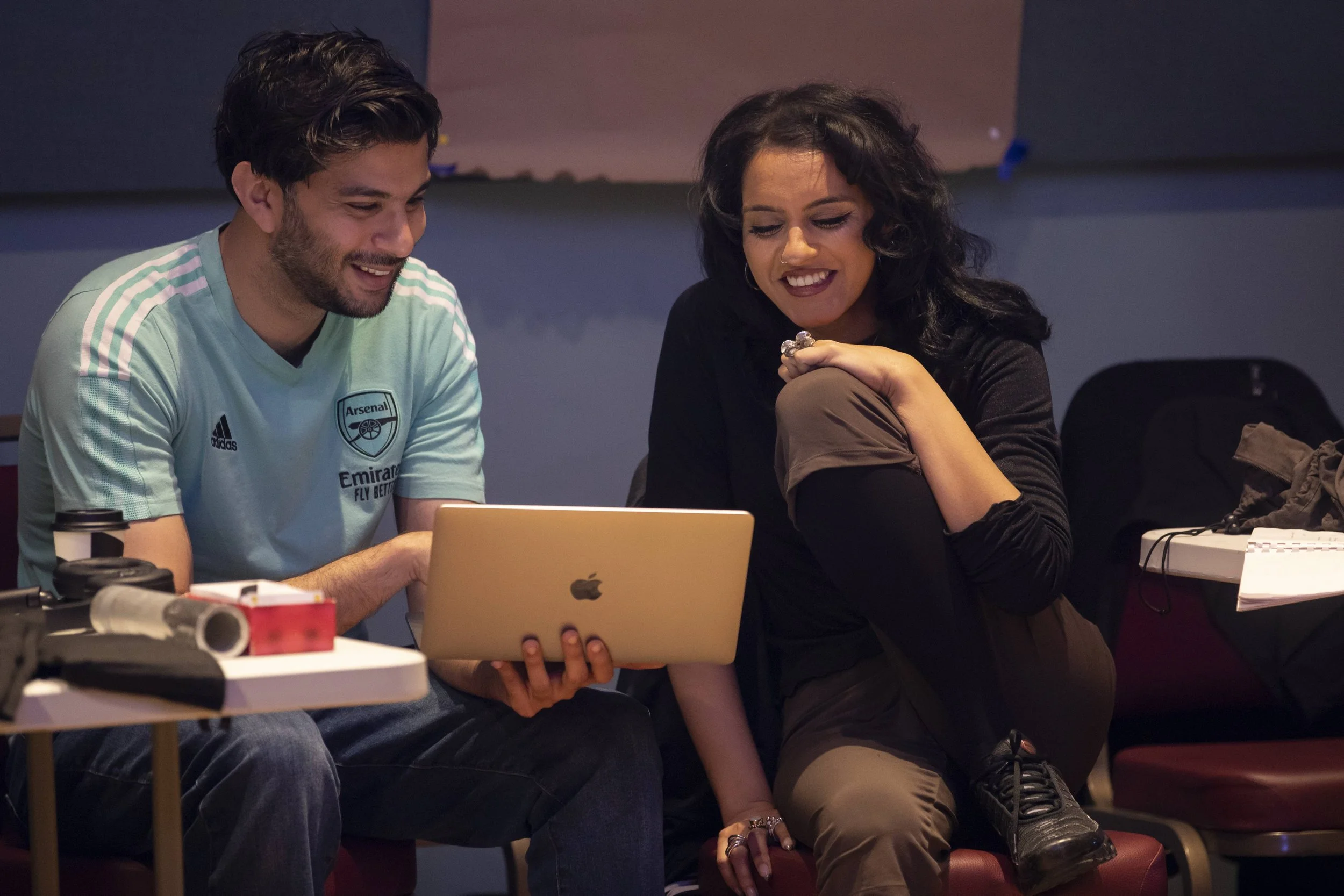
Photography: Ali Wright
How would you each describe your working relationship in the rehearsal room? Where do your roles overlap, and where do they differ?
ZD: Milli facilitates a really collaborative room whilst still being driven by a core vision. The conversations tend to feel really alive because we're all driving toward making the best thing possible. It feels like 'making' in the truest sense.
MB: I agree. We work very collaboratively together. I’m immensely grateful for the trust Zain has always extended to me, which of course goes both ways. We’re always sharing our ideas, every piece I’ve directed by Zain has had his input in the tone and visual realisation too.
What do you understand about each other’s creative instincts now that maybe you didn’t at the start of working together?
ZD: I think Milli understands that I am a frantic re-drafter. I'm not someone who cracks the play on draft 1 (who is?) I find that the text will go through many, many evolutions, and I think Milli knows that with any new writing, it needs to go on a journey.
MB: And I think that’s another reason we work well together, we tend to want to push and push until the very last moment we have to lock the show to realise the best version possible. I worked at The Royal Court for seven years, so I’m very used to (and excited by) throwing new drafts at the wall to see what sticks, and I’m the same with my directorial decisions if it isn’t serving the play. Not every writer will be willing to work that way; it’s an act of generosity to be that trusting with your work.
Where do you tend to challenge each other most, and how does that shape the final work?
ZD: Usually in the lead-up to the rehearsal room and sometimes in previews. We had a really lively debate for BLUE MIST about the ending, and we actually ended up trying two different versions during the preview. I really value the sense that we can see how things land in the room before making a final decision as writer and director, as well as the wider team.
MB: Agree, and I love that. We share an ambition to make every piece of work the best it can possibly be and examine it from every angle. As I said before, it takes real trust and generosity to be able to work that way.
Book your tickets for the latest run of Blue Mist at Leeds Playhouse. Produced by Boundless Theatre, in association with Tamasha.